Weekly Roundup: iFOREX Cuts Outlook After Income Plunge; Who’s Liable When AI Trades?
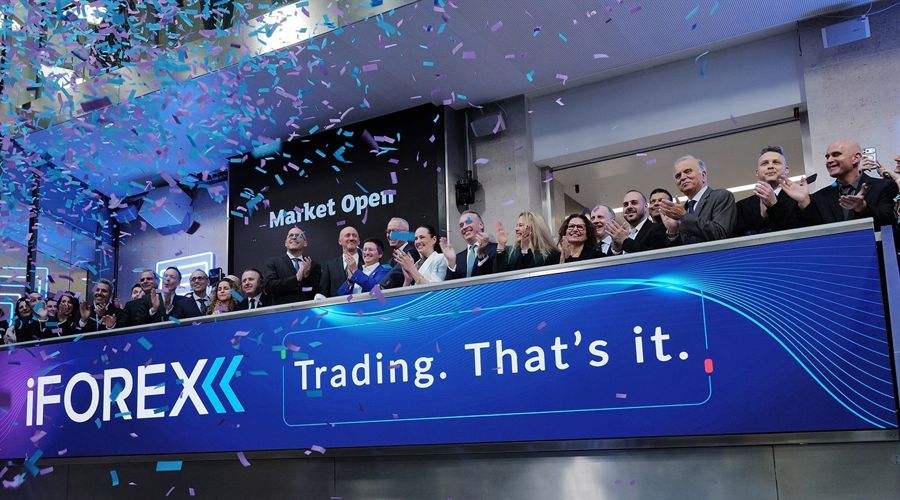
Artificial intelligence, changing regulation and shifting business models shaped this week's financial industry news. Brokers expanded their technology offerings, while regulators continued to examine the risks surrounding complex products and emerging forms of automated trading. Elsewhere, ownership changed hands at London Capital Group, a major payments deal emerged in Cyprus, and iFOREX cut its earnings outlook after a sharp fall in July trading income. Crypto developments also remained prominent, with Capital.com separating its UAE spot crypto business and OKX reporting increased activity following Binance's European retreat. Who Takes Responsibility When an AI Trading Agent Goes Wrong? The rapid arrival of AI agents in trading is raising a question that regulators have yet to answer clearly: who is liable when an autonomous system makes a costly mistake ? Brokers have begun connecting AI tools to client accounts, but rules governing agentic trading remain limited. Robinhood told Finance Magnates that customers are responsible for how their agents are built and the actions they take. However, lawyers, brokers and regulatory experts expect firms to face greater obligations as the technology develops. In the first few weeks of agentic trading on Robinhood, over 50,000 customers have opened agentic trading accounts and are trading millions of dollars per day of equities and options.Writing and executing sophisticated strategies or optimizing your everyday spending no longer... — Vlad Tenev (@vladtenev) June 18, 2026 Possible safeguards include kill switches and circuit breakers, while future requirements could resemble "Know Your Agent" rules. The issue is becoming more urgent as AI agents gain greater access to trading platforms. Scope Markets Adds Copy and Inverse Trading on MT5 Scope Markets launched Scope Copy, a new copy trading service for MetaTrader 5 that also allows clients to take the opposite side of selected strategies. The service, powered by PLUGIT's YOONIT technology, went live after a beta period involving more than 500,000 replicated trades and launches with over 130 strategy providers. Clients can adjust risk and trade sizes, while providers can charge performance fees of between 10% and 50%. The fee model uses a high-water mark, meaning providers must recover previous losses before earning performance fees again. The inverse-copying feature allows a provider's buy order, for example, to become a sell order in the client's account. Basi and Worsfold Take Ownership of London Capital Group London Capital Group changed ownership after its two senior executives, Matthew Basi and David Worsfold , acquired the stakes previously linked to Charles Sabet. Basi, LCG's managing director, and Worsfold, its chief executive, now ultimately own the FCA-regulated business through MBDW Holdings. The stakes were acquired from Walder Wyss, acting on behalf of creditors following the 2024 bankruptcy of FlowBank, the Swiss bank founded by Sabet. Companies House filings confirmed the ownership change, although the transaction value was not disclosed. The deal places LCG directly under the control of its current leadership. The company has operated as an exclusive introducing broker for IG since changing its business model. payabl. Reportedly Agrees €100 Million Deal for Half of the Company Cyprus-based payments company payabl. reportedly agreed to sell a 50% stake to private equity firm ECM Partners in a transaction exceeding €100 million. Group CEO Ugnė Buračienė will retain the remaining half of the company and continue in her current role. The transaction would rank among the largest fintech deals in Cyprus by value. payabl. provides payment processing and gateway services, including foreign exchange and digital asset on- and off-ramps, and serves clients in the retail brokerage sector. The reported deal also highlights growing institutional interest in Cyprus's fintech industry, where several businesses have expanded beyond their original founder-led structures as the sector has matured. iFOREX Cuts EBITDA Outlook After July Income Falls 77% iFOREX cut its full-year 2026 adjusted EBITDA outlook to between $0.5 million and $2.5 million after July trading income fell sharply. The CFD broker reported about $720,000 in trading income for the month, down 77% from approximately $3.1 million a year earlier. It attributed the decline partly to the sharp appreciation of the yen following coordinated US-Japan currency intervention, which moved against its net client exposure. Low market volatility also affected trading income in August. New customers still increased 40% year-on-year in July and deposits rose 8%, but these gains did not offset the income decline. Net cash had fallen to about $10 million by August 17. KNF Keeps CFD Review Open as XTB Shares Decline Poland's Financial Supervision Authority said its review of how CFDs are offered remains ongoing , without providing a timetable or details of potential restrictions. The review is significant for XTB, where CFDs account for more than 95% of revenue, although the broker is seeking to diversify through products including equities and spot crypto. The regulatory uncertainty coincided with a sharp decline in XTB's shares. The stock fell 4.1% on Monday and another 2.7% by late Tuesday morning, leaving it nearly 7% below the previous Friday's close. There is no direct evidence linking the sell-off to the regulator's comments, and the shares had risen strongly before the decline. Oil Volatility Drives Growing Retail Trading Demand Oil market volatility is drawing increased interest from retail traders as geopolitical developments and supply concerns push prices higher. Trading activity has increased across a range of products , from CFDs and exchange-traded funds to options and futures. Micro WTI futures trading was up 317% year-on-year, while the United States Brent Oil Fund, BNO, attracted $419 million in inflows during 2026. Oil prices have been supported by uncertainty surrounding the US-Iran conflict, disruption to shipping routes and Ukrainian attacks on Russian refineries. Retail participation in Micro WTI Crude Oil (MCL) futures has driven YTD average daily volume to 271K contracts, with average daily open interest over 38K contracts. A significant portion of MCL volume continues to originate outside the U.S., as geopolitical uncertainty is... pic.twitter.com/7xV239ChcU — CME Group Active Trader (@CMEActiveTrader) July 23, 2026 At the same time, OPEC and the International Energy Agency have reduced their forecasts for global oil demand. The competing forces underline the risks of trading a market increasingly driven by geopolitical headlines. Capital.com Separates UAE Crypto Business Under New Licence Capital.com will offer spot crypto services to UAE clients through a separately regulated affiliate , Capital Vault UAE, while keeping its existing CFD operations within the broker's current regulatory structure. Capital Vault secured a full federal virtual-asset licence from the Capital Market Authority, allowing it to deal in virtual assets as an agent or matching principal and provide custody services. Once launched, clients will be able to buy virtual assets through the Capital.com app, with execution, settlement and custody handled by the licensed affiliate. The broker has not announced a launch date. The arrangement creates separate regulatory and operational structures for crypto and CFDs, even though clients will access both services through the same application. OKX Reports Surge in Activity Following Binance's MiCA Retreat OKX Europe reported a sharp increase in app downloads and customer inflows after Binance withdrew its MiCA licence application in Greece and stopped onboarding new EU clients. According to Erald Ghoos, CEO of OKX Europe, downloads of the exchange's EU app rose almost 160% in the following 12 days, while inflows from Binance-linked accounts increased more than eightfold. The scale of the migration could not be independently confirmed from broader on-chain balance data. Ghoos also highlighted the continuing gap between licensed and offshore crypto trading, estimating that 95% of European crypto derivatives volume remains outside regulated EU venues. Ghoos said pulling trading volume back onshore would require regulators to enforce against offshore venues while licensed platforms expand their product range to compete with them. This article was written by Tareq Sikder at www.financemagnates.com.