Mercedes aims to stimulate luxury MPV market with plush new VLE
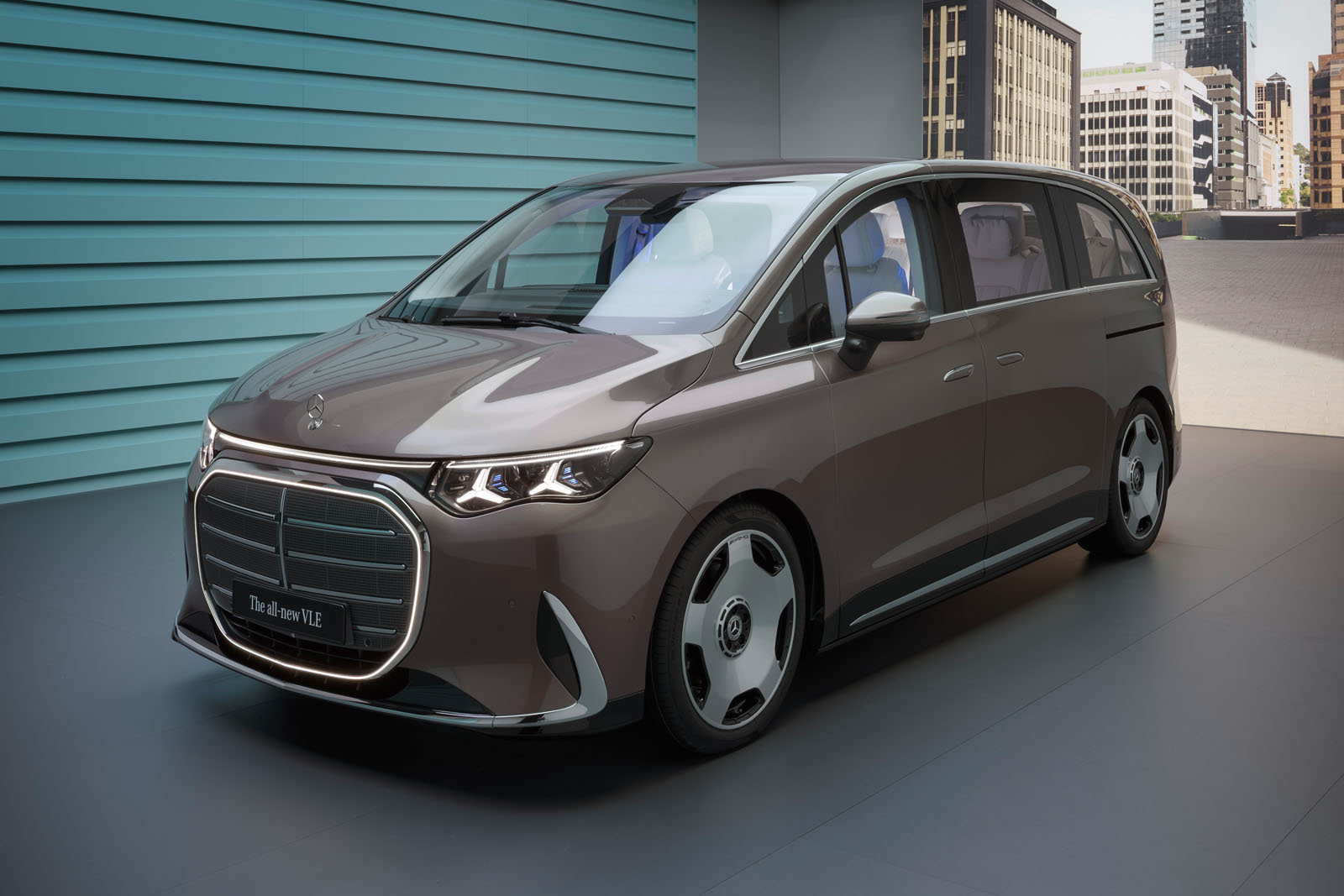
Luxurious new electric MPV looks to find success where the previous EQV didn't – and London will be key Next year’s UK launch of the new Mercedes-Benz VLE will jump-start the market for high-end van-based people carriers from its current low base, predicts Mercedes’ head of vans in the UK. The VLE is based on Mercedes’ new electric VAN.EA platform and will be positioned as a much more premium proposition than the current Vito-based EQV and combustion-engine V-Class . “VLE will actually expand the market here in the UK. It's going to give us a much wider customer base,” Iain Forsyth, managing director of Mercedes-Benz Vans UK, told Autocar. The EQV has struggled to find a market here in the UK. Just 32 examples were sold in the first six months of this year, down a third on the year before, according to figures from the Society of Motor Manufacturers and Traders. The V-Class performed better, with sales of 842. However, the VLE significantly raises the luxury factor with an optional MBUX Superscreen, panoramic roof, ambient lighting and 31.3in retractable rear display. Even higher-spec VLS and VLS Maybach versions are also planned. “They will be distinctly different from the Vito,” said Forsyth. The vehicle has been given a new category title of 'Grand Limousine' on the brand’s website, a promotion from the EQV’s ‘Van’ label, and it promises to be a much more usable proposition for the target chauffeur market. The new 115kWh battery for the launch 300 model offers up to 443 miles of range, compared with 222 miles for the current EQV with a 93kWh battery. The new model has much more charge power, at 300kW versus 110kW for the old one, which means less downtime for chauffeurs and taxi drivers. All new private hire vehicles for the key London market must be zero-emission capable, according to Transport for London’s requirement, which means emitting no more than 75g/km of CO2 with a minimum 20-mile zero-emission range. Most of the big-mileage drivers have turned to plug-in hybrids, but Mercedes hopes the long range and fast charge capability of the VLE will persuade them to switch to electric. “Private hire is really where a lot of the success will come from,” said Forsyth. The posh van has largely elbowed out the stretch limo and is probably squeezing the market for the S-Class, which logged 248 UK sales in the first six months, down 29%. The unwieldiness associated with driving a van will be partly negated by the rear-wheel steering. “Manoeuvring the tight streets of London will definitely become much easier than that in a V-Class,” said Forsyth. The brand is hopeful the long range will also appeal to families, whose choices for more car-like electric passenger vans are currently restricted to the Volkswagen ID Buzz and new Kia PV5 . UK prices have not yet been revealed but in Germany the VLE has been priced from €78,348 (£67,000), compared with €59,100 for the EQV with the smaller, 60kWh battery. A cheaper version of the VLE using an 80kWh battery with lower-cost lithium-iron-phosphate chemistry is also planned. Production of the VLE has already started at Mercedes’ Spanish plant for “select markets”, including Germany. The VLE makes for an upmarket launch for the VAN:EA platform, which will also underpin future replacements for the Vito. A combustion-engine version of the platform, called VAN:CA, is also planned and will be used to create passenger van versions, likely with the familiar Mercedes diesel. The VLE, while a product of the highly profitable Mercedes Vans division, will stand outside the van organisation in the UK and be sold alongside the brand’s passenger cars.